What is Web Development?
Web development is a broad term used for a set of skills required to
build a website hosted over the internet or intranet. It includes
designing web pages, programming, database management, client
side/server side scripting, security configurations, ecommerce
development, writing markup and coding.
In the developer ecosystem,
Web Development Training in Jaipur is synonymous to the non –
design work involved in websites such as coding. Having said that, while
coding forms the foundation of web development, a successful front end
web developer needs strong knowledge of associated skills such as user
interface/ user experience (UI/UX) design, database administration
(DBA), client side and server side scripting and search engine
optimization (SEO).
7 languages to know to become a successful web developer
Website development has moved from the traditional static websites to
dynamic ones that update in real time. Being an expert programmer is no
longer sufficient, though it is still necessary. Modern organizations
demand custom web development solutions. When a development project
kicks off, it is common for clients to not know what they really want as
the end product. This is the time where front end developers need to
think beyond programming and visualize possible solutions that can solve
the problem at hand.
In the following list, we mention background skills as well as tips
that a successful front end web developer must have in his web
development
1) HTML
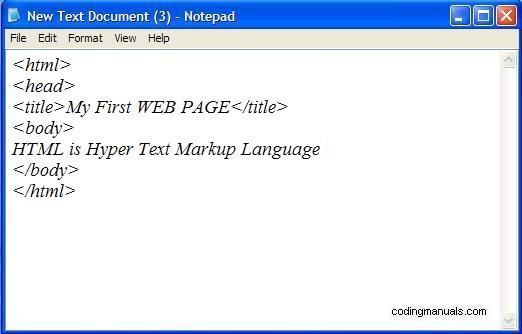
HyperText Markup Language (HTML) is the worldwide standard when it
comes to creating visually engaging web pages and applications. It is
commonly misunderstood to be a programming language, but it actually is a
markup language. It forms the building blocks of websites and
applications. It is versatile enough to create engaging, interactive
applications for all platforms – computers, tablets and mobile phones.
All web browsers can read pages designed in HTML and translate them into
visible/audible web pages. HTML is capable of embedding code snippets
written in external scripting languages (such as JavaScript). It also
combines well with Cascading Style Sheets (CSS) to standardize the look
and feel of websites across pages and platforms.
2) CSS
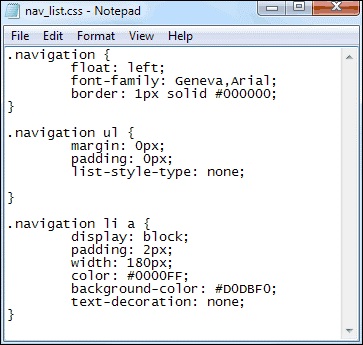
Cascading Style Sheets is a widely used styling language. Developers
often need to maintain a consistent look and feel of websites and web
applications. Instead of writing the same code for each and every HTML
page, it is convenient to write a master style sheet and then keep
referring to it from different pages to achieve desired design. Style
sheets isolate the document’s content from its presentation, which comes
handy for complex web pages. They allow developers to have more control
over layout, fonts, colors and accessibility. Also, it saves bandwidth
and your site loads more easily because fewer lines of codes are
transferred to the browser every time your websites receives a hit.
3) JavaScript
It is a high level programming language that is one of the three
building blocks (HTML and CSS being the other two) for developing web
content. It supports a number of programming styles such as object –
oriented, imperative and functional programming. It is useful for both
client side and server side scripting of web applications. It is also
useful for environments that aren’t web based, such as pdf documents,
site specific browsers, etc. It is an excellent companion for browsers,
as it allows just-in-time compilation.
4) ASP/ ASP.NET
Ever since Microsoft released its first server-side scripting engine
ASP (Active Server Pages) for dynamically generated web pages - web
development has never been the same. Modern websites have come a long
way from the static websites of the 1990s. They have become dynamic,
interactive and responsive and ASP has become a popular tool for their
development. ASP.NET is the improved version of classic ASP, with a
bigger library support and faster processing.
5) PHP
Originally, PHP stood for
Personal Home Page but it now stands for
PHP: Hypertext Preprocessor.
It is a server side scripting language suited for web development,
though it is also used for general programming. It provides clear
design, integration with other platforms and languages and well
organized modules which gives developers better control. The biggest
advantage of PHP is that it is open source, which means it is available
for free. It is similar to the popular programming languages such as C
and Java. It has a big developer community across the world and works on
all major operating systems such as Linux, UNIX and Windows. It is easy
to embed PHP into an existing HTML code, which is a boon when you are
looking to convert a static website into a dynamic one.
6) Relational/Object oriented Database language
Database is an integral part of website and application development.
Although Database Administration (DBA) has emerged as a specialized
position, developers need to know how data is stored and how to retrieve
it. Structured Query Language (SQL) is one of the most popular database
languages familiar to developers around the world. It can efficiently
retrieve data from huge database. SQL databases adhere to a
well-established standard (adopted by ANSI and ISO) and it doesn’t
require extensive coding skills.
7) Collaborative Version Control tool
Most organizations hire a team of developers spread across
geographies to get their development work done. Team members constantly
provide updated versions of code and it is important to be familiar with
a collaborative, version control tool which helps you keep track of
changes. Github is one such open source tool that allows version control
functionality for free. It is widely used and has a large user
community to resort to for help.

No comments:
Post a Comment